As the world and human race have evolved, so has the means by which we communicate. At first, hand signals, cave drawings and the primitive languages of ‘caveman’ marked the earliest forms of communication. This transitioned into fully formed languages and writing. Along with writing, new sources of media such as photos, videos and songs became popular forms of communication. And with the invention of the silicon chip, all forms of communication became available and transferable through computers. This marked the beginning of our shift toward digital data.

Offline dossier to online dossier
Modern information technology trends suggest that we have an insatiable desire to aggregate all of our information through digital means. Companies such as Facebook, Flickr and Google provide useful services to users that participate in these communities. Other products, for whatever reason, seem only to be a nuisance that create no palpable value (See Blippy, Foursquare; and again later). The importances of these products reside in their ability to provide real-world effects, through Internet means. Friends can stay connected through Facebook with common sharing of information and can inform each other of given locations, so as to make the connection come full circle back into the real-world. In the process, small bits of information are left behind.
Important or not, this data is collected, stored and forever connected to our username, or IP address. Companies such as Facebook, Google and Amazon target ads and ‘recommended products’ based on proprietary algorithms coupled with all of their known information. If you look for a few programming books on Amazon, chances are you’re going to get a suggestion for some sort of Tim O’Rielly book next time you log on. Amazon has taken the place of a bookstore employee that suggests the next related book for whatever your interest may be. In this case, it does so instantly and with better-assembled data about a person’s interests. Whether you like it or not, these digital dossiers of personal information are formed based on everything digital. From places you’ve been, websites you’ve visited, products you’ve viewed or mouse movements you’ve made.

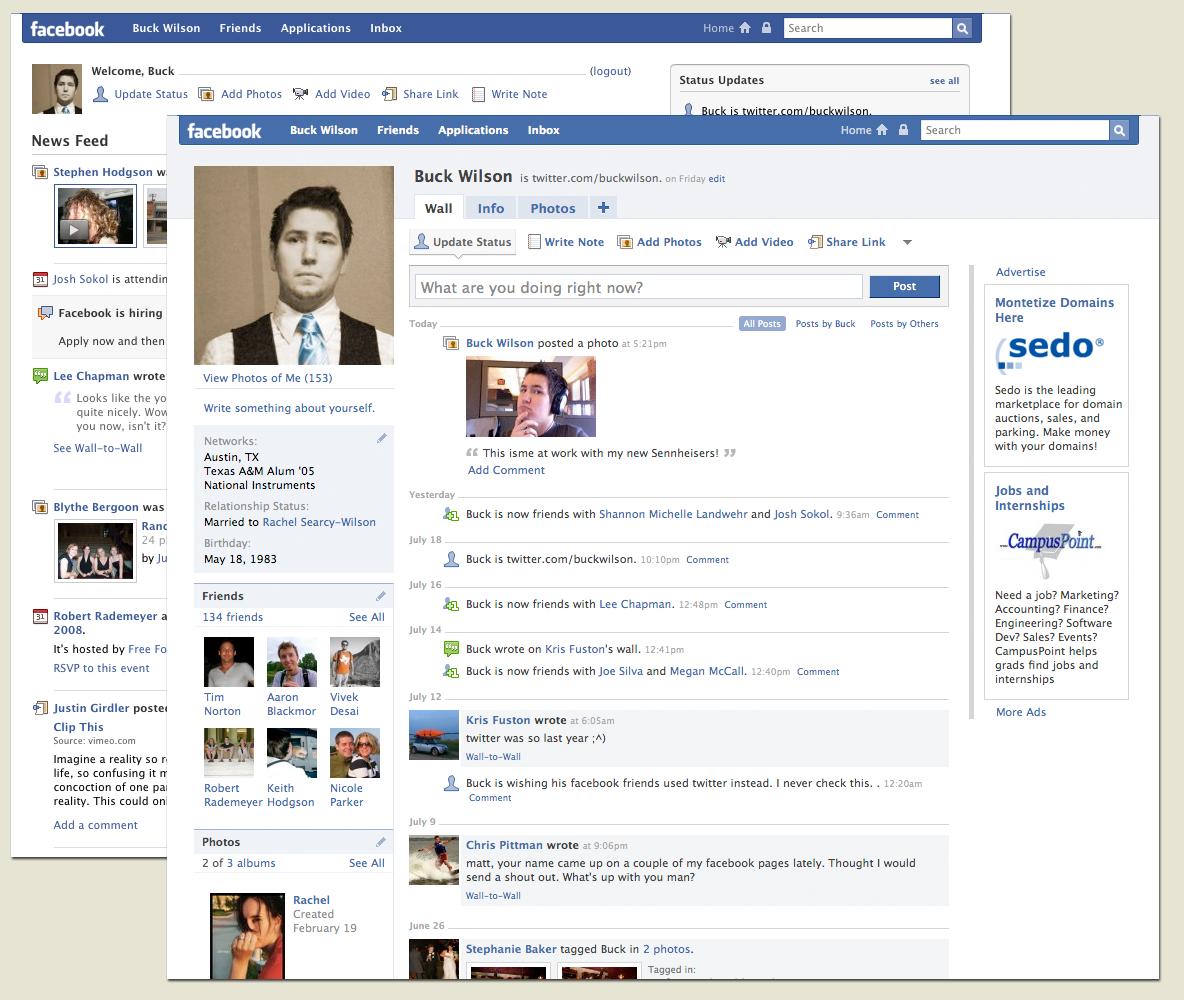
Some (myself included) choose to participate in the construction of our digital dossiers. Facebook has become a great way to transform the entire social portion of people’s lives into 1’s and 0’s that are stored on the Internet. (Watch) Users actively participate in the construction process by uploading pictures, maintaining conversations through posts, messages or chats or liking certain bands, movies, or books. Ever wondered what all the data might look like aggregated? (Try it out, seriously, download all of your FB data and see the substantiality). Small tidbits of information observed in pieces may seem inconsequential. But, when aggregated, this information creates a much different situation and it becomes much more valuable. The individual wants to protect the dossier, while other services want to obtain and exploit the dossier.
What if privacy is breached?
With most personal information digitized, such as Facebook likes, bank statements, medical records, or relationship statuses, how can we be sure that it will always remain in a secure location? Sure, server warehouses seem safe (maybe not). But what if the data is stolen/found/obtained over the Internet? (Firesheep) Imagine the outbreak if Facebook, Google or some other products were found to be emitting data about its users to others. Oh wait…whoops (Here, Here, Here). There’s sever backlash when an Internet service fails to make good on its social contract of maintaining tight security of users’ data. On the other hand, Foursquare and Facebook Locations are built on the premise that people want to share their much more with others. The iPhone OS 5 has this feature as well that allows GPS tracking of other phones (sometimes for incriminating purposes).

How can we be sure that this information with always be for the betterment of society? Up to the minute tracking abilities could possible pose security threats to anyone that may be interested exploiting them.

Whatever our obsession may be with sharing personal information, it could pose a substantial threat if used in ways that target the real-world individual from digital information. The interest in uploading, sharing and aggregating all information lies in the movement to digitize the real world. The comfort levels that some experience on the Internet suggests either misunderstanding of the dangers involved, or irrational behavior.
A few ways to protect yourself:
– For those who maintain personal websites and seek protection, Robots.txt allows the creator to disallow most web-crawling bots to index such sites. While most major search engines support it, it is not perfect. A good start, nonetheless.
– To create secure files, TrueCrypt provide a free, open-sourced product that will take any file, encrypt and mount it to a disk image with password protection.
– For a secure email service, Hushmail is considered the best.
– Good web practices such as disabling cookies or taking note when a certain website is secure (HTTPS or SSL encrypted) will help prevent any unnoticed breached or privacy
Should there even be more protection?
While taking certain precautionary measures is important, such as described above, there is no guarantee that all digital information amassed will be completely protected. The only sure-fire way to make sure is to not participate in the creation of a digital dossier in the first place. But, for most it’s too late. In this case, what else can be done to bring about more protection from potential leaks of data? Government intervention or control won’t work; as they’re most likely those that could best use such information for incriminating purposes. Legislation could only seek retribution after data is already ‘misplaced’ and would not create any new incentives to further protect it. Is there anything that can legitimately protect someone like me?
What about the idea of ‘Mutually Assured Destruction’ in this context? If we all have incriminating, embarrassing, or private information online, then we all at the mercy of those who control such data. Surely there’s someone else out there with worse or more incriminating or more embarrassing information than I have. As such, any exposure will look relatively much worse for them; and as long as I’m not the worst, I’m not a target…Yeah, that’s probably the best way to think about it.




 at all times. Thankfully, the anonymous masses of the internet have proven to be more than willing to fill in the gaps the government leaves behind. As such, we increasingly see “Big Brother” being replaced with your actual big brother (and your neighbors, co-workers, and complete strangers). In England, one program in particular, called
 Yale Law Tech
